Top Amazon Sellers News This Week
This week’s retail news roundup shows AI and automation moving from pilots to full-scale operations across fulfillment, delivery, stores, and consumer tech, transforming how retailers compete and execute.
- Retail and supply chain tech reaches execution mode: Retail tech is shifting from pilots to real operations. Warehouse automation, embedded AI, smarter returns, in-store AI, robotics, and sustainability are going mainstream, making clean data and automated task coordination essential. In fact, Amazon’s expanding robotics footprint suggests how quickly these capabilities are becoming the new norm.
- Customer experience meets supply chain: Recent Dash Cart, Alexa+, Bee, and Fire TV upgrades show how customer-facing AI is directly shaping demand. These tools change how shoppers discover, select, and buy products, forcing tighter connection between merchandising, inventory placement, and fulfillment to avoid stockouts and lost sales.
- National Retail Federation (NRF) 2026 preview: NRF 2026 returns with the theme The Next Now, bringing together retail and supply chain leaders to focus on reducing friction and modernizing operations. Keynotes from Ryan Reynolds and REI CEO Mary Beth Laughton lay out a must-attend agenda for 2026 planning.
Our latest retail news breaks down the most important retail and supply chain tech updates, so you can see what actually matters operationally and why it’s worth a deeper dive now.
The AI-Robot Tag Team Transforming Retail
AI, robotics, and automation have moved from buzzwords to business-as-usual. Yet while 74% of supply chain leaders see AI as the biggest driver of change in the next few years, only 29% feel truly prepared to compete, according to Gartner. For sellers, this means new opportunities for efficiency (and new challenges if you’re not keeping pace).
AI-Powered Orchestration: From Data to Decisions
AI isn’t just analyzing data anymore, it’s making things happen:
- Embedded AI in Planning: Generative AI now summarizes demand trends, spots service issues, and recommends fixes in real time. Retailers can ask questions like “Why are orders down in the Northeast?” and get instant answers without digging through spreadsheets.
- Smarter Forecasting: AI detects patterns in sales, promos, and supply hiccups, then adjusts inventory automatically. The catch? It needs clean data. When retailer and supplier systems fall out of sync, AI may optimize in the wrong direction, assuming stock exists when it doesn’t, leading to inventory shortages or excess. IHL Group found 67% of retailers now face frequent retailer-brand relationship issues tied directly to inventory accuracy.
What this means: Faster insights, steadier stock levels, fewer manual tasks, but outdated or disconnected data is still the biggest risk.
Amazon Warehouse Robots: The New Warehouse Crew
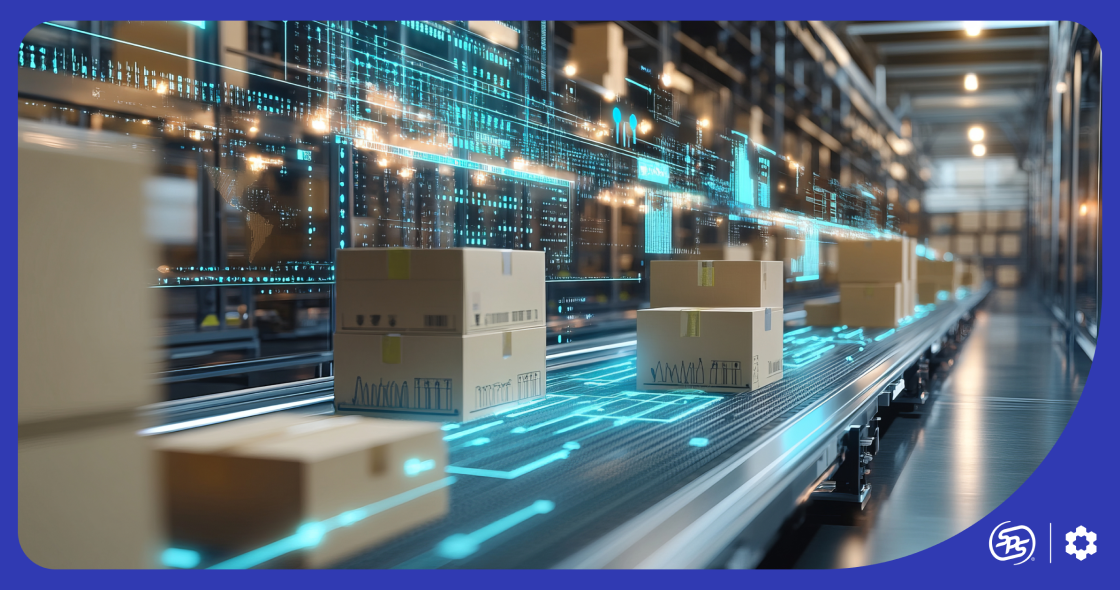
Amazon now runs over 1 million robots across its fulfillment centers. Here’s what they’re doing:
- Sequoia: Speeds inventory shelving for storage by 75%.
- Vulcan: Picks items from top and bottom shelves.
- Proteus: Navigates warehouses autonomously.
- Titan: Handles oversized items.
- Blue Jay: Streamlines Same-Day delivery.
Meanwhile, innovations like Amazon’s acquisition of Rightbot highlight the push toward automating truck loading and unloading with robots capable of handling unstructured loads (tasks traditionally considered too complex for machines). Other companies, including Boston Dynamics and UPS, are experimenting with suction-based, autonomous, and tele-operated robots to optimize the movement of goods.
What this means: Faster fulfillment, more predictable shipping, potentially lower costs, but inventory and orders will need to be in sync with increasingly automated systems.
AI in Returns, Fraud, and Customer Experience
AI is also cleaning up the messy parts of retail:
- Streamlined returns management: With online retail return rates estimated to hit 19.3% in 2025, efficient returns management is crucial. Insights from Covariant.ai, a warehouse automation company, show how robots powered by the Covariant Brain can automatically route items for restock, reducing manual labor and returns processing costs.
- Fraud Detection: Detects suspicious returns by spotting patterns and behaviors, helping curb the 9% of returns that are fraudulent, which is worth tens of billions each year.
- Better Shopping: AI-powered search, recommendations, and guided selling help customers find what they need (or what you want them to buy).
What this means: Fewer errors, faster inventory recovery, and sharper demand insights driven by AI recommendations.
Sustainability and Operational Efficiency
AI and robotics are also helping retailers go green:
- Renewable-powered warehouses and greener fleets cut costs and emissions.
- Circular supply chains (reusing materials) keep products in use longer. For example, AI can track which smartphone components are still functional, directing them back into refurbished devices instead of landfill.
- Custom packaging machines (like Amazon’s paper bag system) reduce waste without slowing things down. These machines come with sensors that can pick the smallest bag for each order to avoid excessive packaging.
What this means: Sustainability now intersects with cost and efficiency. Decisions about sourcing, packaging, and logistics directly affect lead times and margins.
Save on FBA fees with the Product Resizer tool. Our free calculator shows how small packaging adjustments can move your products into lower-cost size tiers, saving thousands in fees. Calculate your savings now.
Final Thoughts
AI and robotics have moved beyond optional experiments and are emerging as the backbone of modern supply chains. Companies that sync their operations and data with these tools will get faster, more dependable fulfillment. Those that don’t might struggle with slowdowns and missed chances.
Unlock the future of ecommerce with our AI Revolution white paper. Discover how leading Amazon sellers leverage AI for personalization, product research, and advertising optimization. Download your free guide now and start integrating AI.
AI You Don’t Notice: Amazon’s New Consumer Tech Era
Consumer AI isn’t something you have to switch on anymore. At Consumer Electronics Show (CES) 2026, Amazon demonstrated that the next wave is ambient AI that quietly works in the background, anticipates needs, and transforms intel into real-world action. From the home to the car to the grocery aisle, these Amazon updates show AI quietly embedding itself into everyday buying moments, and showing what you should be preparing for next.
From Voice Assistant to Always-On Companion
Amazon’s biggest theme this year is ambient AI, led by the expansion of Alexa+. No longer confined to smart speakers, Alexa+ now spans voice, mobile, and browser via Alexa.com, creating an assistant that follows customers across devices.
Customers can plan, shop, and manage tasks with context carried across devices, and early data shows Alexa+ users making three times more purchases. Deep integrations with autos, TVs, appliances, and health platforms further embed Alexa into daily life, compressing shopping decisions before traditional search begins. However, for sellers, this could also mean higher stakes around product data accuracy, inventory availability, and pricing alignment.
Fire TV and Ring: AI That Anticipates, Not Interrupts
Amazon is building AI into entertainment and security with faster, personalized Fire TV experiences and Ring’s Fire Watch, which detects smoke or fire using AI. The new Ring Appstore opens cameras to third-party apps, giving users more ways to find and use new features.
Amazon Bee: Wearable AI Moves from Novelty to Utility
Bee extends ambient AI into daily routines by turning conversations into actions like emails, calendar invites, and follow-ups. What it does differently:
- Actions: Turns spoken intent into outcomes, such as drafting emails, creating calendar invites, and managing follow-ups automatically.
- Daily Insights: Surfaces behavioral and emotional patterns across weeks or months, acting more like a personal coach than a task manager.
- Templates: Converts conversations into structured summaries tailored to context, from study notes to sales follow-ups.
- Privacy-first design: No audio storage, full user control over transcripts, and optional data sharing only.
As Bee and Alexa converge, AI becomes proactive. That means shopping cues may increasingly come from lifestyle context rather than explicit intent.
Dash Cart: AI Meets the Physical Store
Amazon Dash Cart brings AI-driven convenience to Whole Foods with real-time spend tracking, personalized deals, and checkout-free shopping. Other features include:
- Produce weighing inside the cart.
- Built-in navigation and Alexa shopping list integration.
- Larger cart capacity with a lighter design.
Its AI-powered cameras, weight sensors, and scanner instantly log every unit sold without waiting for checkout.
For retailers, these tools can speed up sell-through while making inventory gaps visible faster than ever by capturing real-time, SKU-level data as shoppers add items in the cart.
Overall, Amazon’s CES 2026 shows consumer AI shaping demand before shoppers act. So, consider optimizing product data, planning for faster spikes, rethinking promotions, and watching omnichannel signals from wearables, TVs, and carts.
NRF 2026: Retail’s Big Show Returns with “The Next Now”
Retail’s biggest event is back! NRF 2026, themed The Next Now, will bring together 175+ sessions, thousands of exhibitors, and industry leaders to explore how to navigate modern operational pressures and uncover growth opportunities.
At the event, which will run from January 11–13 at NYC’s Jacob K. Javits Convention Center, SPS Commerce will lead a featured session titled “Future under pressure: Inside the moves retailers are making for 2026 with SPS Commerce.”
During this presentation, SPS Commerce will break down how retailers are responding to growing operational pressures, including the following key focus areas:
- Instant Commerce and Automation: Leverage smarter inventory, predictive analytics, and automation to deliver same-day and next-day fulfillment.
- Resilient Supply Chains: Build flexibility with diversified sourcing and reimagined logistics in a volatile global market.
- Retail Footprint and Experience: Stores are now hybrid hubs, combining in-store shopping, online orders (ship or pickup from store), and for multi-purpose warehouse clubs like Costco, foodservice. By using micro-fulfillment, smart store technology, and unified inventory tracking, retailers can move products faster and keep stock visible everywhere, with NRF 2026 showcasing these practical, high-speed solutions in action both on the main Expo floor and in focused areas like the Foodservice Innovation Zone.
NRF 2026 can serve as a live playbook for entrepreneurs ready to act on the trends shaping retail in 2026. From automation and supply chain resilience to AI-powered operations and hybrid store strategies (e.g., blending physical stores with online fulfillment), this conference is packed with tools and plans to stay ahead.
Other Retail News This Week
1. Track Amazon Business Customer Patterns
Amazon added new B2B metrics to track refunds, claims, and feedback from business customers. Use these insights to refine your B2B strategy and spot trends that impact performance.
2. Reduce Returns with Insights and Opportunities
The new dashboard gives UK/EU sellers a quick view of returns and product-level issues, with tailored recommendations to minimize future returns and optimize inventory.
3. Find VAT and EPR Providers with Service Hub
Service Hub helps sellers compare and connect with VAT and EPR providers across Europe, with transparent pricing and fast responses to keep your compliance on track.
Keeping Up with AI
This week’s retail news roundup shows that AI and automation are driving major changes in fulfillment, merchandising, and customer engagement. Prepare now as AI becomes the backbone of modern retail operations with these strategies:
- Optimize product data: Keep listings accurate, complete, and structured for AI-driven discovery and recommendations.
- Align inventory and forecasting with SoStocked: Use predictive analytics and monitor real-time data to prevent stockouts or overstocks.
- Leverage automation: Explore AI-powered tools for demand planning, returns management, and order orchestration to reduce manual work.
- Rethink promotions: Adjust deals and pricing to match AI-influenced buying patterns across online and in-store channels.
- Watch omnichannel signals: Track cues from wearables, smart home devices, Dash Carts, and AI assistants to anticipate demand.
For nearly five years, we’ve kept sellers informed, publishing 250 issues packed with policy changes, announcements, and community events. Subscribe below or share with your team to get these insights delivered weekly.