Listen to This Article
Top Retail News to Know This Week
Retail right now feels like it’s moving in two directions at once, with growth and caution unfolding side by side. As Shein invests in supply chains and Amazon reaches $717 billion in revenue, legacy retailers Saks Global and Eddie Bauer face bankruptcies and restructuring amid inflation, tariffs, and declining consumer demand.
- Shein and Amazon make strategic moves: Shein is investing in supply chain upgrades and innovation while Amazon reports $716.9 billion in 2025 revenue and is reportedly exploring an AI content marketplace.
- High-end retail bankruptcies continue: Saks is ending its Amazon storefront partnership following its bankruptcy filing. Meanwhile, Eddie Bauer’s retail operator has filed for Chapter 11 and begun store liquidations.
- Amazon shares 2026 marketing playbook for sellers: Against a backdrop of retail uncertainty, Amazon released its “Top 2026 Marketing Trends” guide highlighting AI-powered creativity, creator partnerships, and upcoming full-funnel and streaming ads releases.
Continue reading for a closer look at what these changes could mean for you in 2026.
When Ecommerce Giants Expand and Legacy Retailers Restructure
Retail in 2026 is showing both momentum and reset. Some companies are doubling down on infrastructure and supply chains, while others are stepping back from partnerships and restructuring their businesses. The industry is clearly focusing more on running efficient operations to keep costs in check and mitigate logistics risks.
Shein Continues to Invest in its Suppliers, But Scrutiny Remains
Launched in 2023, Shein’s Supplier Community Empowerment Program (SCEP) shows how it’s evolving from rapid-growth disruptor to supply-chain architect. By the end of 2025, the company had committed more than $42 million to factory upgrades, worker support programs, and manufacturing innovation aimed at modernizing production across its supplier network.
Nearly 200 supplier factories have undergone upgrades, and training initiatives are helping suppliers adopt more technologically advanced production models. These changes could improve efficiency, reduce production errors, and support Shein’s fast product development cycle.
However, the timing and visibility of these initiatives matter. Shein continues to face criticism over environmental and labor practices, while its Environmental, Social and Governance (ESG) disclosures show emissions rising alongside growth. Allegations tied to labor conditions in supply chains persist, even as the company tightens compliance policies and enforcement.
From an industry perspective, the Shein Supplier Community Empowerment Program appears to serve two purposes at once: improving production capability while addressing credibility challenges related to fast fashion’s environmental and labor impact. But whether these supplier-support initiatives can meaningfully change perception is still an open question.
Amazon and Walmart Push the Competitive Ceiling Higher
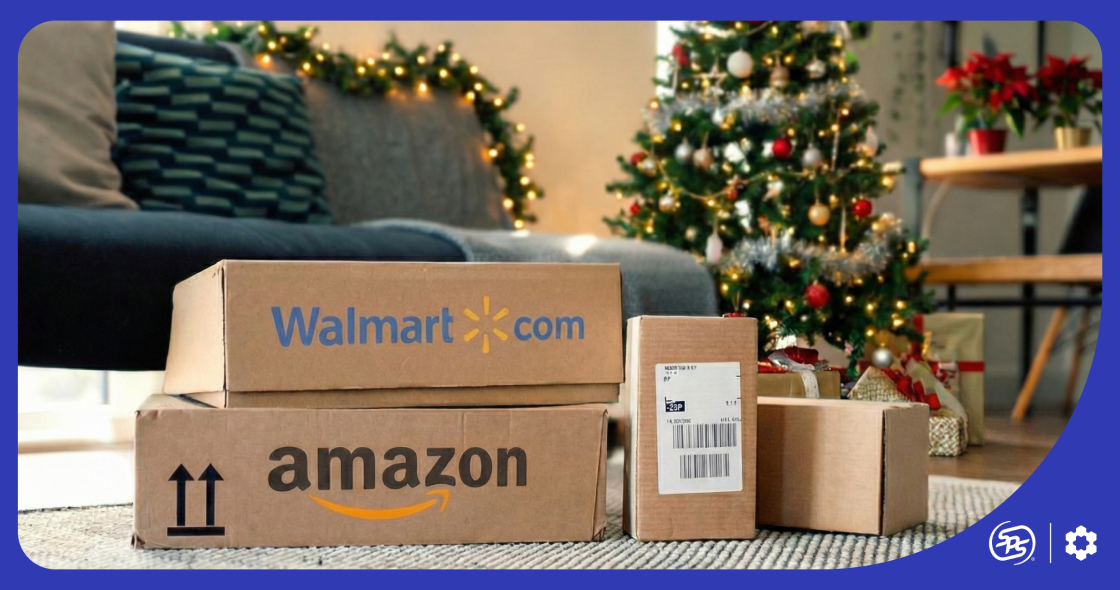
Meanwhile, the battle between Amazon and Walmart continues to heat up. Amazon reported $716.9 billion in revenue for 2025, surpassing $700 billion for the first time and putting it in line to overtake Walmart’s projected $712 billion in annual revenue.
While the comparison isn’t perfectly aligned (i.e., Amazon 2025 revenue is heavily supported by AWS and advertising) the milestone reflects how retail competition has moved beyond traditional merchandising. Both companies are increasingly adopting pieces of each other’s playbook.
Amazon continues to push into grocery, faster delivery, and new AI initiatives, including a reported marketplace where publishers could license content to AI companies. Meanwhile, Walmart is accelerating ecommerce growth, automation, and marketplace expansion, with same-day delivery now reaching 93% of US households.
For sellers, this rivalry matters because it accelerates platform innovation. Faster delivery expectations, broader assortments, and AI-driven shopping experiences quickly become baseline requirements across marketplaces. The real contest now isn’t just retail: it’s who can build the most complete commerce ecosystem around the customer.
Retail Bankruptcies Reflect Structural Pressure
But not every retail news story this week points to expansion.
Eddie Bauer’s North American operator filing for Chapter 11 and beginning liquidation sales across 180 stores highlight the continued pressure on brick-and-mortar retail. Rising costs from inflation, tariffs, and supply chain problems (delays and shortages) are eating into company profits.
Therefore, instead of spending big money on physical stores or factories, Eddie Bauer is now reportedly switching to cheaper, smarter ways of doing business such as ecommerce, licensing (letting other companies use their brand or product in exchange for a fee), and wholesale partnerships (selling their products in bulk to retailers who then handle the selling).
Saks Amazon Partnership Ends
A similar strategic reset is happening in luxury retail. Saks Global is ending its Amazon storefront partnership following its own bankruptcy filing, citing limited brand participation.
The split reflects a deeper tension between marketplace scale and brand-controlled customer experience. Luxury retail depends on curation, storytelling, and exclusivity, elements that don’t always translate well to marketplace environments designed for frictionless transactions.
Amazon, however, is not retreating from luxury. The company says it will continue operating its luxury storefront and expanding both premium and everyday product assortments, supported by faster delivery and pricing improvements. Amazon is clearly betting that assortment expansion and logistics strength can win across price tiers, even without Saks.
Amazon’s Marketing Playbook for Uncertain Times
Amid these successes, restructurings, and strategic pivots, Amazon is also offering sellers a practical roadmap for navigating uncertainty. Its “Top 2026 Marketing Trends” guide focuses less on technology hype and more on execution. Key themes include:
- Treating AI as a creative and strategic partner for personalization at scale.
- Building authentic partnerships with creators to strengthen brand trust.
- Using streaming and interactive ads to reach customers in new environments.
- Creating cohesive multichannel experiences across platforms.
- Using full-funnel insights to optimize marketing performance.
In uncertain markets, sellers that adjust quickly will outperform those relying on scale alone.
Other Amazon Sellers News This Week
1. Prepaid Return Labels Now Required for High-Value Items
As of February 8, 2026, Amazon requires all US sellers to use the Amazon Prepaid Return Label (APRL) program for seller-fulfilled returns, including high-value items previously exempt, to standardize returns and speed up refunds. While the change simplifies the customer experience, some sellers are evaluating the potential impact on return costs, fraud risk, and edge cases like multi-package orders, making this update worth reviewing closely.
2. Brand+ Goes Global with AI-Driven Advertising on Amazon Ads
Amazon’s Brand+ is now available worldwide, giving advertisers access to AI-powered prospecting, premium video and display inventory, and campaign automation designed to connect awareness to conversions. If you’re looking to strengthen brand visibility while tracking measurable results, this new ad solution is worth exploring.
3. Amazon Pharmacy Expands Same-Day Delivery to More Communities
Amazon Pharmacy plans to bring Same-Day prescription delivery to nearly 4,500 US cities by the end of 2026, expanding access to essential healthcare items through its fulfillment network. This move highlights how Amazon continues to extend fast delivery into new categories, and why sellers should pay attention to rising convenience expectations.
4. Prepare for Easter Shopping with These Optimization Tips
Amazon is encouraging sellers to get ahead of Easter demand by updating listings with seasonal keywords, reviewing inventory, and planning promotions. A few early adjustments to your storefront and fulfillment strategy could help capture spring shopping traffic.
5. Sell Globally Update Simplifies International Expansion
A new “expansion steps” feature in Sell Globally walks sellers through account setup, listing products, shipping inventory, and launching promotions in new marketplaces. If cross-border growth is on your roadmap this year, this guided workflow can make expansion easier to manage.
Staying Competitive as Retail Changes
This week’s retail news shows an industry moving quickly, with rising expectations around fulfillment, AI, and customer experience, while bankruptcies highlight the need for financial discipline.
Here are a few priorities to keep in mind:
- Diversify sales channels: Retail news around bankruptcies shows the value of balancing marketplace sales with direct-to-consumer or wholesale opportunities.
- Improve fulfillment reliability: Faster delivery expectations are becoming standard across platforms, making logistics performance a competitive advantage.
- Use AI strategically: Apply AI tools to marketing, forecasting, and content to improve efficiency without losing brand voice.
- Invest in customer relationships: Build loyalty through social commerce and creator partnerships so your business isn’t dependent on a single marketplace.
For nearly five years, we’ve kept sellers informed, publishing 250 issues packed with policy changes, announcements, and community events. Subscribe below or share with your team to get these insights delivered weekly.